



<The Burrow>
Production History
2025 New Work, Performing Arts Creative Entity Support Project
2026 Re-run, Performing Arts Creative Entity Support Project
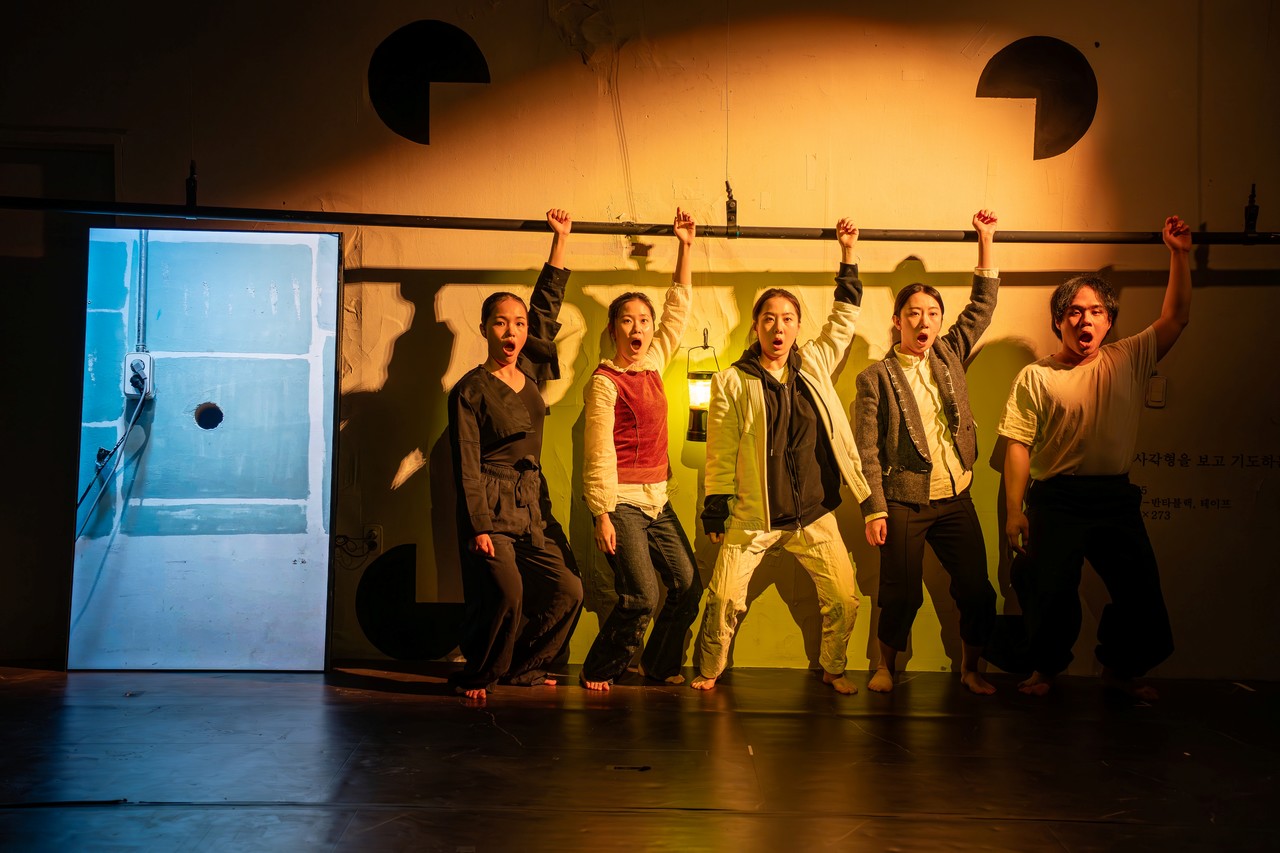
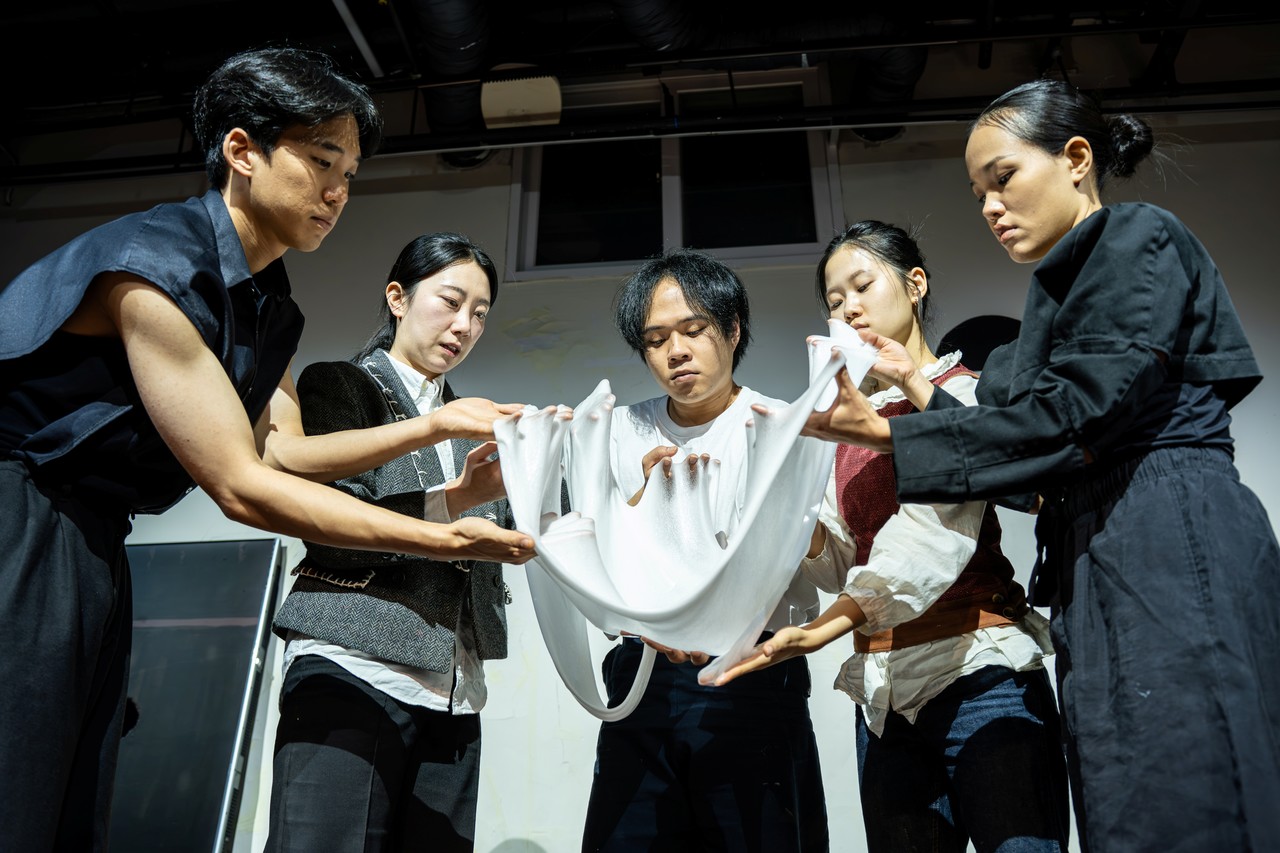
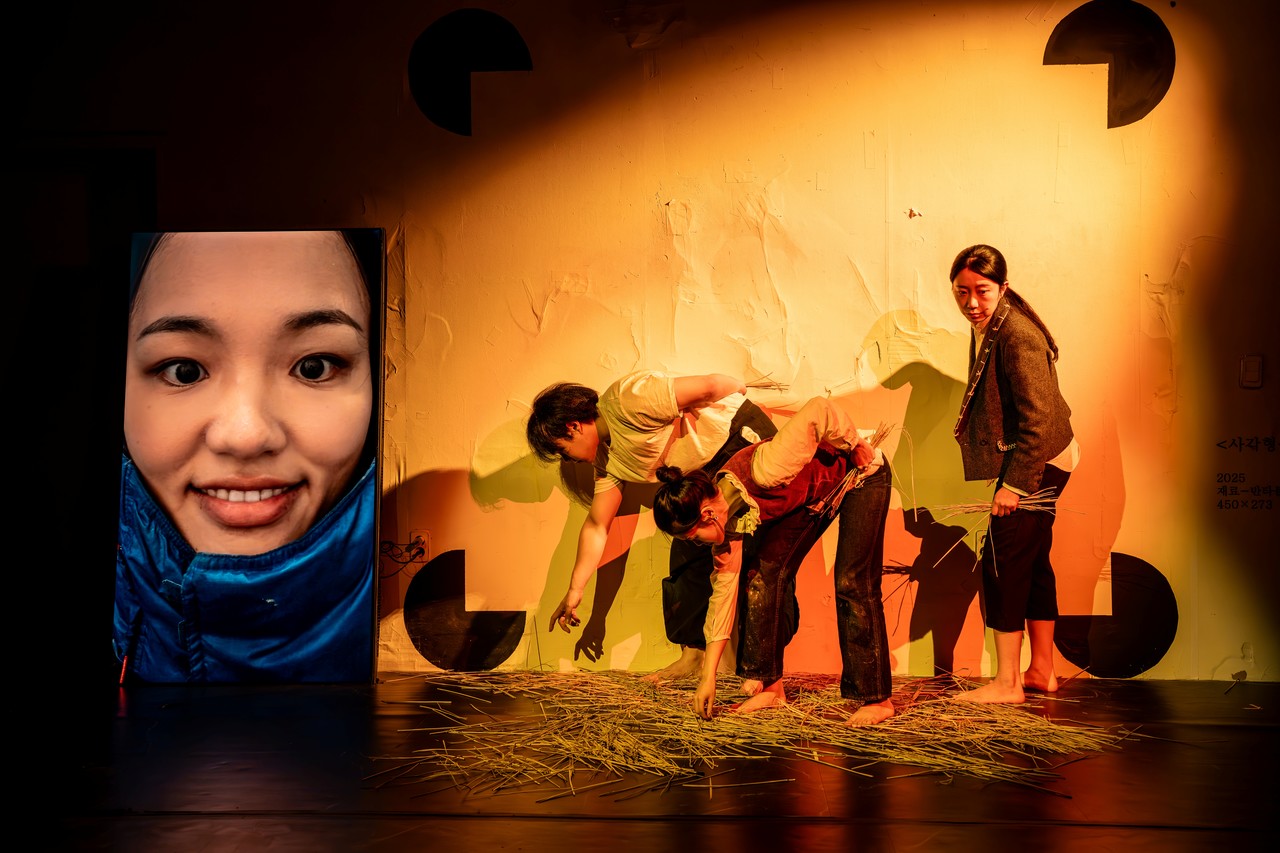
Synopsis
TO. Our Audience
At the proposal of a collaboration with Theatre Haddangse, Franz Kafka's The Burrow (Der Bau) premiered in December 2025, and returns for a re-run in July 2026.
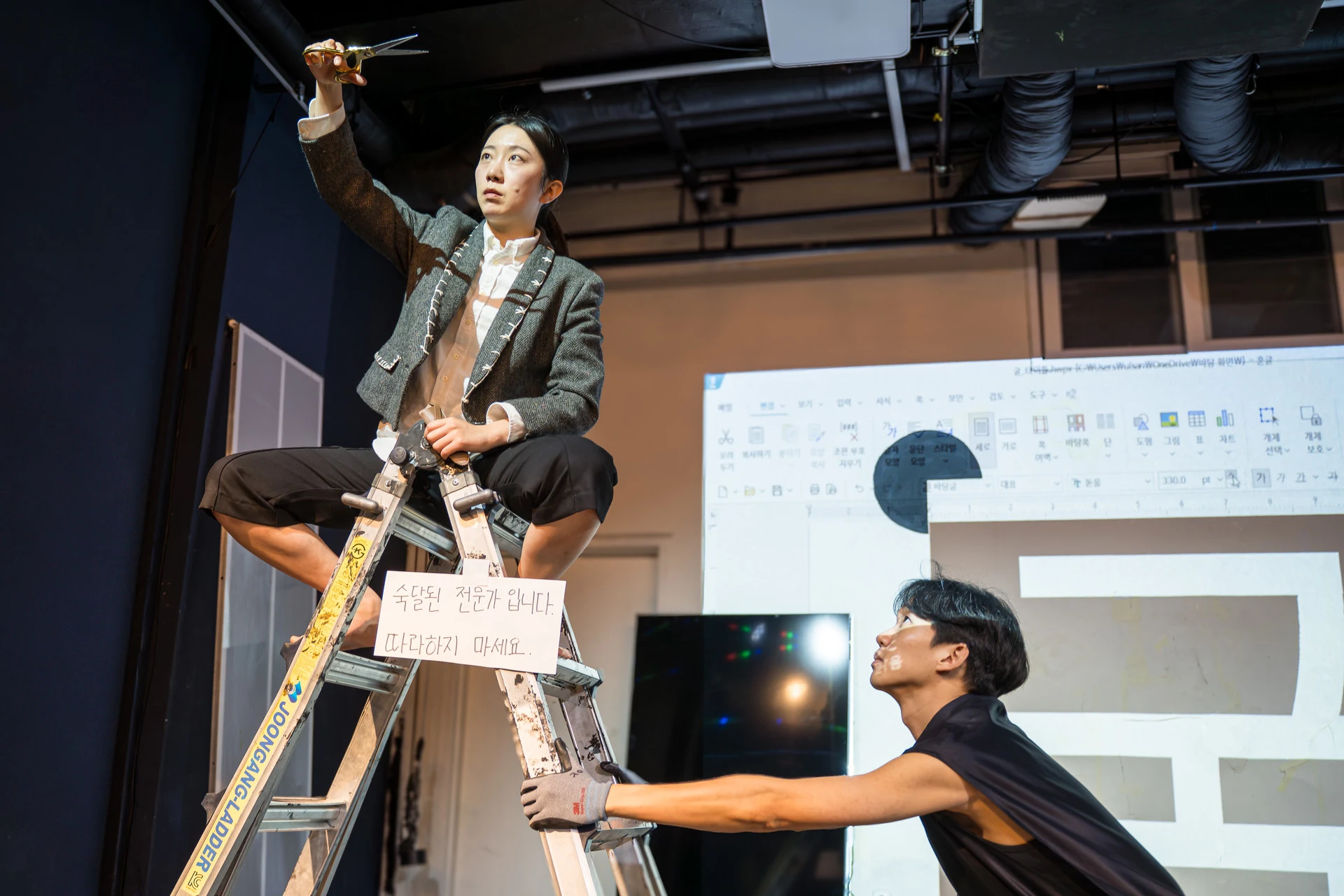
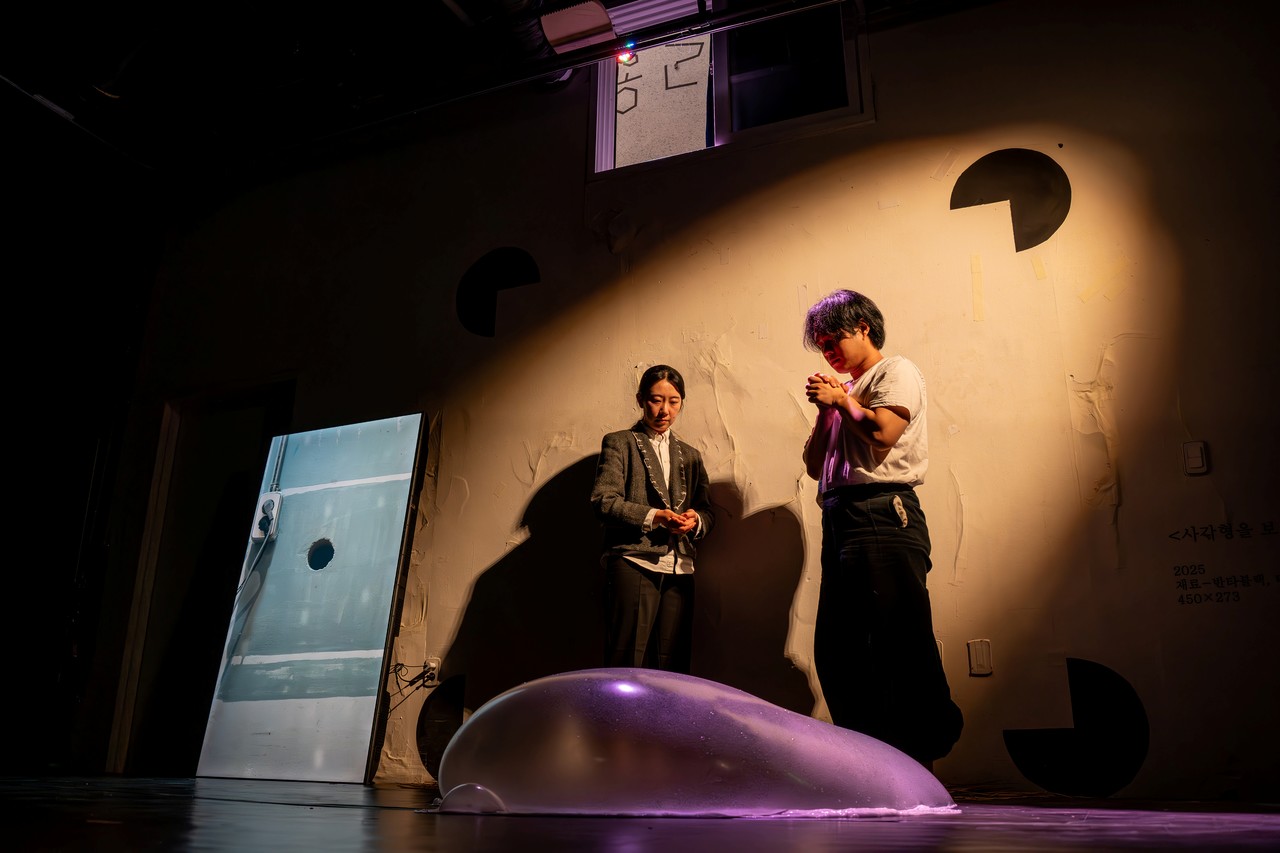
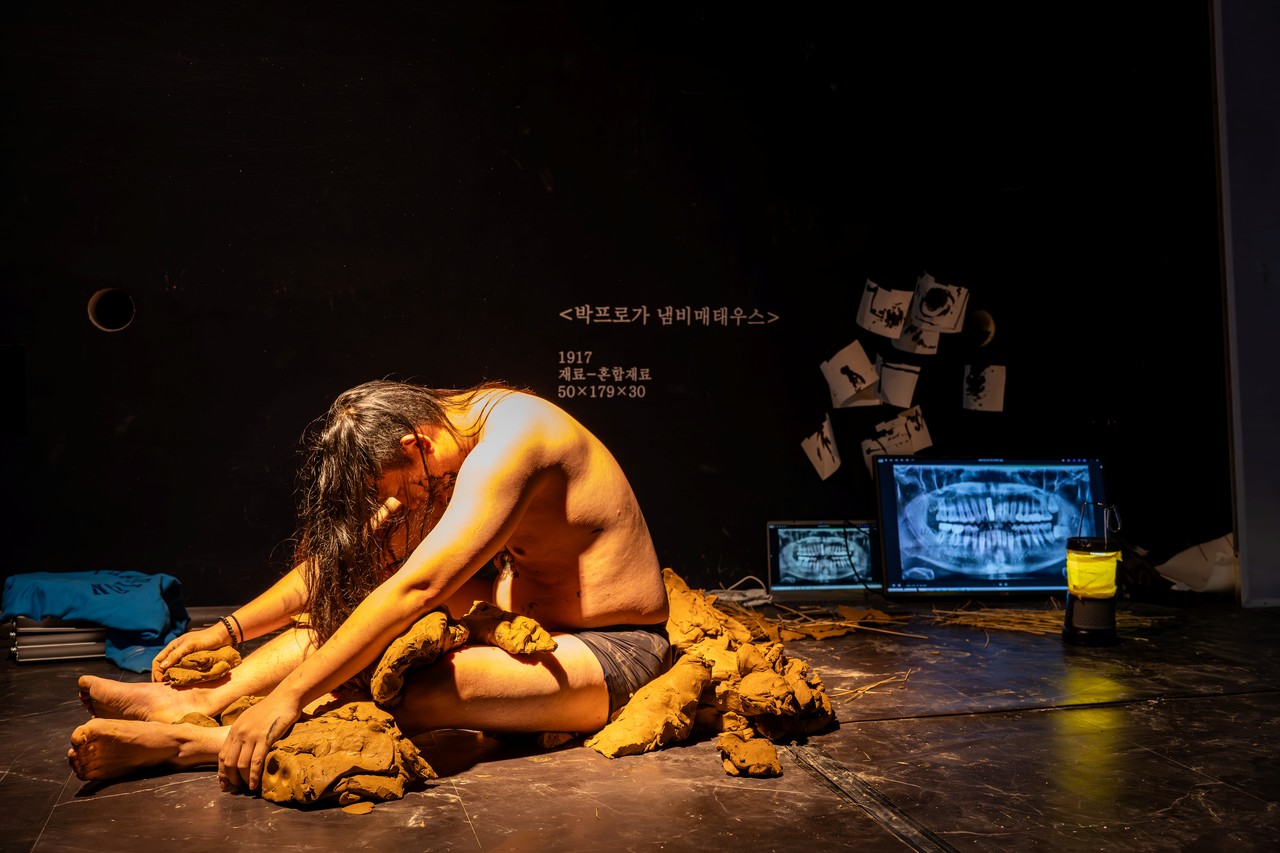
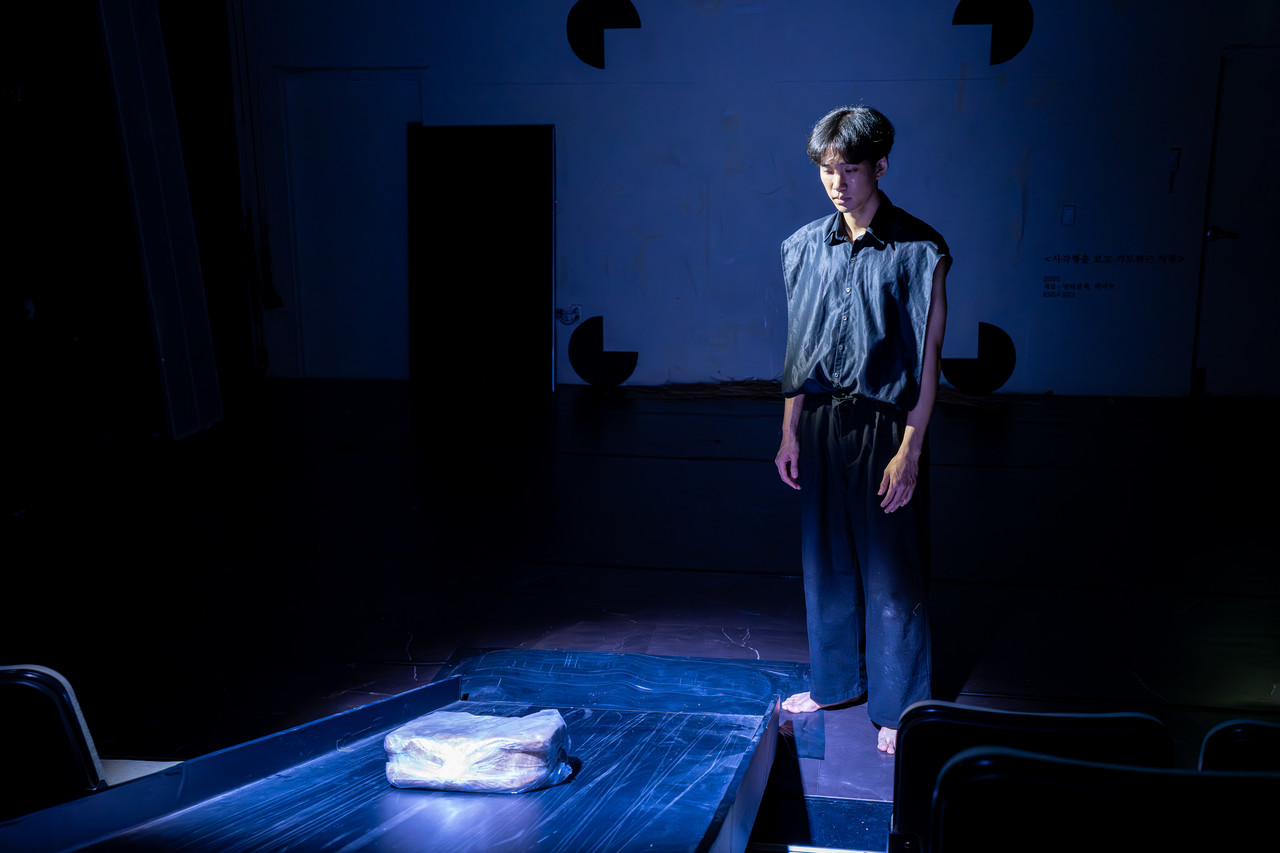
Watching a Haddangse production, one often finds oneself face to face with 'the mind of a child.' I wonder if this comes from the company's particular way of creating work — using objects, space, and the actors' bodies to invite the audience not just to think, but to participate intuitively.
An interesting division of labor emerges in this collaboration between Haddangse and Kafka. The actors give shape to the space just outside The Burrow — the margins of the story. Interviews with the actors, Kafka's text, and adaptations of my own writing together form the landscape of that margin: the history, and the time, of the burrow.
The reason I love winter is that it's oyster season.* While searching through Franz Kafka's work, I found and read The Burrow (Der Bau) — but it turned out to be an earthen burrow, not the kind you eat. I set down here the memory of reading it, as though digging down through damp earth, leaving the salty smell of the sea behind me.
The novel The Burrow unfolds entirely as the first-person account of a hybrid being — mole or human, it's never clear — who digs and lives in a complex, maze-like underground burrow to escape danger and anxiety from the outside world. As the pages turn, the narrator grows increasingly obsessive and compulsive over an unidentifiable sound, never knowing how far the burrow extends or where it ends. It is a novel whose spatial and psychological description left me feeling suffocated, my body tightening — the kind of book where, if your mind wanders even slightly, you lose your way and have to start the passage again. The novel ends unfinished, yet I feel it connects to this era, where, somewhere, someone is still digging their own burrow and living in it.
On December 3rd and 4th, 2024, at some point, I found myself collapsed somewhere, having been struck by a kind of psychological hit-and-run from the state. Since that day, the sense of time within me has begun to feel like wartime. This resonates with the anxiety, the endless labor (the flow), and the drive to connect with something that I found in the novel The Burrow. This production could also be described as a "war-show"** — made up of acts that either sustain or resist war and everyday life.
I conducted interviews with the nine actors appearing in this production (Go Eun-Byul, Park Kwang-Seon, Kim Ye-Jin, Baek Sang-Min, Lee Ji-Yeon, Kang Kyeong-Cheon, Hwang Ho-Chan, Kim Seung-Tae, Moon Suk-Kyung). From questions rooted in each individual's anxiety, emptiness, compulsion, void, depression, and death — and the context surrounding the opposite of those questions — material was gathered. Their words were then rewritten as short instructions (event scores), which are enacted through the body in performance.
I have also added something of my own sense-memory from over a decade ago, working at a subcontractor for Hyundai Motors — trimming parts destined for car engines on a conveyor belt. In the tedium of repetitive labor, watching carefully so my hand wouldn't get caught in the machine, the one thing that got me through the small hours was, ironically, the 'time' — the fact that morning was coming. Time, in which the end draws steadily nearer. This production is something placed upon that territory of 'time,' and I hope what the audience encounters is not a finished answer, but a landscape of bodies and objects enduring that time.
Caring for Oneself
Franz Kafka once wrote of his own writing that he wrote "for myself" — a statement that carries a great deal within it. The inner necessity by which his existence could not sustain itself without writing; the way, across so many of his novels, the 'self' is taken apart; and the dissolution of the subject so complete that, after writing The Judgment in a single night, he recorded that "the story had ruled over me." Perhaps Kafka's process of writing was itself a way of caring for himself — arising from the theme of 'the father,' from his work at a workers' accident insurance company where he confronted labor and industrialization, and from his identity as a Jew who wrote in German. From this, the direction of this adaptation took shape. Just as Kafka wrote for himself, this production, too, exists as "a performance for caring for myself."
— Director Lee Myung-Woo
press
[PRESS] 각자의 굴에서 함께 넘는 선 - 연극 '굴'
https://www.artinsight.co.kr/news/view.php?no=78905
완벽한 안전지대를 향한 광기, 그 이면의 고립.. : 네이버블로그